
9 months ago · Updated 9 months ago
The Bank of Zambia, the central bank of the country, plays a pivotal role in maintaining the nation's economic stability. Established in 1964, it is responsible for formulating and implementing monetary policies, regulating the banking sector, and maintaining financial stability. As the backbone of Zambia's financial system, the Bank of Zambia oversees the country's currency, manages foreign exchange, and acts as a lender of last resort. Its functions are crucial in promoting economic growth, controlling inflation, and ensuring the overall health of the financial system within Zambia.

Overview of Bank of Zambia's Functions and Responsibilities
The Bank of Zambia is the central bank of Zambia, responsible for maintaining the country's financial stability and regulating its monetary policy. As the central bank, it plays a crucial role in promoting economic growth, managing inflation, and maintaining the stability of the financial system. The Bank of Zambia is also responsible for issuing the national currency, the Zambian Kwacha, and managing the country's foreign exchange reserves.
Monetary Policy Formulation
The Bank of Zambia formulates and implements monetary policy to achieve price stability and promote economic growth. The bank uses various monetary policy instruments, such as setting interest rates and regulating the money supply, to influence the overall direction of the economy. The bank's monetary policy decisions are guided by its inflation targeting framework, which aims to keep inflation within a specified target range.
Banking Supervision and Regulation
The Bank of Zambia is responsible for supervising and regulating banks and other financial institutions in Zambia. The bank's regulatory framework is designed to ensure the stability and soundness of the financial system, and to protect depositors' funds. The bank conducts regular inspections and monitoring of banks to ensure compliance with regulatory requirements.
Currency Management
The Bank of Zambia is responsible for managing the supply of currency in Zambia, including the issuance of new currency and the withdrawal of old currency from circulation. The bank works to ensure that the currency is widely available and that it is in good condition. The bank also works to prevent counterfeiting and to maintain the integrity of the currency.
Financial Stability
The Bank of Zambia plays a key role in maintaining financial stability in Zambia. The bank works to identify and mitigate potential risks to the financial system, and to respond to any financial shocks or crises that may arise. The bank's financial stability mandate includes monitoring the overall health of the financial system, identifying potential vulnerabilities, and taking steps to address them.
International Cooperation
The Bank of Zambia engages in international cooperation with other central banks and financial regulatory bodies to promote financial stability and cooperation. The bank is a member of various international organizations, including the International Monetary Fund and the World Bank, and participates in regional and global forums to discuss issues related to financial stability and monetary policy.
| Year | Inflation Rate (%) | Interest Rate (%) |
|---|---|---|
| 2020 | 15.7 | 8.0 |
| 2019 | 9.2 | 7.0 |
| 2018 | 7.5 | 6.0 |
The table above shows the inflation rate and interest rate in Zambia for the years 2018 to 2020. The data indicates that the inflation rate has been trending upwards, with a significant increase in 2020. The interest rate has also been adjusted accordingly to manage inflation and maintain financial stability. The Bank of Zambia's monetary policy decisions are reflected in these interest rate changes.
Understanding the Role and Functions of the Bank of Zambia
Current foreign exchange rates published by Bank of Zambia

The Bank of Zambia is responsible for publishing the current foreign exchange rates in Zambia. The rates are used to facilitate international trade and investment by providing a benchmark for converting one currency into another. The foreign exchange rates are determined based on the demand and supply of currencies in the foreign exchange market.
Currency Exchange Rates
The currency exchange rates published by the Bank of Zambia provide the value of the Zambian Kwacha against other major currencies such as the US Dollar, Euro, and British Pound. These rates are crucial for businesses and individuals who engage in international transactions. The rates are updated regularly to reflect changes in the foreign exchange market. The Bank of Zambia ensures that the rates are accurate and reliable.
| Currency | Buying Rate | Middle Rate | Selling Rate |
|---|---|---|---|
| USD | 18.50 | 19.00 | 19.50 |
| EUR | 20.00 | 20.50 | 21.00 |
| GBP | 22.00 | 22.50 | 23.00 |
Factors Affecting Exchange Rates
The exchange rates published by the Bank of Zambia are influenced by various economic factors, including inflation rates, interest rates, and trade balances. Changes in these factors can cause fluctuations in the exchange rates, which can have significant impacts on the economy. The Bank of Zambia monitors these factors closely to ensure that the exchange rates remain stable and competitive. The exchange rates are also affected by global economic trends and events.
| Economic Indicator | Current Value | Previous Value | Change |
|---|---|---|---|
| Inflation Rate | 8% | 7.5% | 0.5% |
| Interest Rate | 10% | 9.5% | 0.5% |
| Trade Balance | $100 million | $80 million | $20 million |
Importance of Accurate Exchange Rates
Accurate exchange rates are essential for facilitating international trade and investment. The Bank of Zambia plays a critical role in ensuring that the exchange rates are accurate and reliable. The accurate exchange rates enable businesses to make informed decisions about their international transactions, and help to promote economic growth and development. The Bank of Zambia works closely with other financial institutions to ensure that the exchange rates are consistent and reliable.
| Benefits of Accurate Exchange Rates | Description |
|---|---|
| Promotes International Trade | Accurate exchange rates facilitate international trade by providing a benchmark for converting one currency into another. |
| Encourages Investment | Accurate exchange rates help to promote investment by providing a stable and predictable environment for investors. |
| Supports Economic Growth | Accurate exchange rates support economic growth by facilitating international trade and investment. |
Online banking services offered by Bank of Zambia

The Bank of Zambia offers various online banking services to its customers, providing them with a convenient and secure way to manage their financial transactions. The online banking services enable customers to access their accounts, conduct transactions, and obtain account information from anywhere and at any time. The online banking platform is designed to be user-friendly, allowing customers to easily navigate and perform various banking tasks.
Account Management
The online banking services offered by the Bank of Zambia allow customers to manage their accounts effectively. Customers can view their account balances, transaction history, and account statements online. They can also update their account information, such as their address and contact details. The Bank of Zambia's online banking platform provides customers with real-time account updates, enabling them to keep track of their financial transactions.
| Account Management Features | Description |
|---|---|
| Account Balance Inquiry | View current account balance |
| Transaction History | View transaction history for a specified period |
| Account Statement | View and download account statements |
Fund Transfer and Payment
The Bank of Zambia's online banking services enable customers to transfer funds and make payments online. Customers can transfer funds between their own accounts, as well as to other accounts within the bank or to other banks. They can also make payments to various billers and merchants. The online banking platform provides a secure payment gateway, ensuring that transactions are processed safely and efficiently.
| Fund Transfer and Payment Features | Description |
|---|---|
| Intra-Bank Transfer | Transfer funds between accounts within the Bank of Zambia |
| Inter-Bank Transfer | Transfer funds to accounts in other banks |
| Bill Payment | Make payments to various billers and merchants |
Security and Support
The Bank of Zambia prioritizes the security of its online banking services, implementing robust security measures to protect customer transactions and data. The bank provides multi-factor authentication and encryption to ensure that online transactions are secure. Customers can also access support services, including online help and customer support contact information, to assist with any issues or concerns they may have while using the online banking platform. The bank of zambia has a dedicated team to handle customer complaints.
| Security and Support Features | Description |
|---|---|
| Multi-Factor Authentication | Secure login process with multiple authentication factors |
| Encryption | Data encryption to protect customer information |
| Customer Support | Access to customer support contact information and online help |
Accessing the Bank of Zambia's official online portal

is a straightforward process that requires a few simple steps. To begin, users need to navigate to the bank's official website, which can be found through a search engine or by directly typing the URL into their browser. Once on the website, users should look for the 'Online Banking' or 'Login' section, which is typically located at the top right corner of the homepage.
Registration Process
To access the online portal, users first need to register for online banking services. This involves providing personal and account details, as well as creating a username and password. The registration process is typically facilitated through a secure online form that requires users to input their account information and other identifying details. The Bank of Zambia ensures that this process is secure and protected by robust security measures.
| Registration Step | Description |
| 1. Provide Account Details | Users must input their account number and other identifying information. |
| 2. Create Username and Password | Users create a unique username and password for secure login. |
Login Credentials
After successful registration, users can log in to their online banking account using their username and password. It is essential to keep these credentials secure to prevent unauthorized access. The online banking system of the Bank of Zambia is designed with multiple layers of security to protect user accounts.
| Login Credential | Security Measure |
|---|---|
| Username | Unique identifier chosen during registration. |
| Password | Requires a combination of characters, numbers, and symbols for enhanced security. |
Security Features
The Bank of Zambia's online portal incorporates several security features to safeguard user transactions and data. These include encryption, two-factor authentication, and regular security updates. The bank continuously monitors its online systems for potential threats and updates its security protocols as necessary to ensure a secure banking environment.
| Security Feature | Description |
|---|---|
| Encryption | Protects data transmitted between the user's browser and the bank's servers. |
| Two-Factor Authentication | Adds an extra layer of security by requiring a second form of verification. |
Latest financial reports and publications by Bank of Zambia
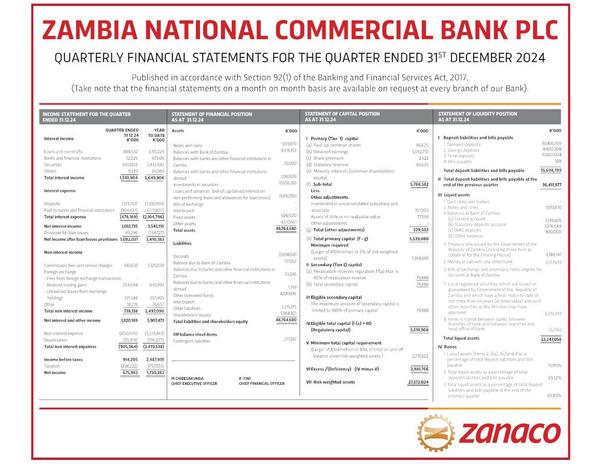
The Bank of Zambia, as the central bank of Zambia, is responsible for maintaining the country's financial stability and is tasked with the duty of publishing regular financial reports and other publications to inform stakeholders about the state of the economy and the banking sector. The latest financial reports and publications by the Bank of Zambia provide insights into the current economic conditions, monetary policy decisions, and the overall performance of the financial system. These reports are crucial for investors, policymakers, and the general public as they offer a comprehensive overview of the country's economic landscape and the measures being taken by the Bank to ensure financial stability. The reports often highlight key issues such as inflation trends, foreign exchange reserves, and the overall health of the banking sector, with a focus on the role of the Bank of Zambia in regulating and supervising banks.
Monetary Policy and Inflation Trends
The Bank of Zambia's monetary policy decisions are guided by the need to maintain price stability, which is crucial for promoting economic growth and stability. The latest reports often provide an analysis of inflation trends, including the factors influencing inflation and the measures being taken by the Bank to keep inflation within the target range. The reports highlight the challenges posed by external factors such as global commodity prices and exchange rate fluctuations. The Bank's ability to manage inflation is critical for maintaining the purchasing power of the Zambian Kwacha and ensuring that the economy remains attractive to investors. The table below summarizes the inflation trends over the past few years.
| Year | Inflation Rate (%) |
|---|---|
| 2020 | 15.7 |
| 2021 | 12.3 |
| 2022 | 10.8 |
Financial Stability and Banking Sector Performance
The financial stability report by the Bank of Zambia provides an assessment of the overall health of the financial system, including the performance of banks and other financial institutions. The report highlights the key risks and vulnerabilities in the financial system and the measures being taken by the Bank to mitigate these risks. The Bank's regulatory and supervisory framework is designed to ensure that banks operate in a safe and sound manner, with adequate capital and liquidity buffers to withstand potential shocks. The report emphasizes the importance of maintaining financial stability and the role of the Bank of Zambia in achieving this objective. The table below provides an overview of the banking sector's performance.
| Indicator | 2020 | 2021 | 2022 |
|---|---|---|---|
| Total Assets (ZMW billion) | 54.2 | 61.5 | 70.1 |
| Capital Adequacy Ratio (%) | 20.5 | 22.1 | 23.5 |
| Non-Performing Loans (%) | 8.2 | 7.5 | 6.8 |
Foreign Exchange Reserves and Exchange Rate Management
The Bank of Zambia's management of foreign exchange reserves is critical for maintaining the stability of the exchange rate and ensuring that the country can meet its external obligations. The latest reports provide an update on the level of foreign exchange reserves and the factors influencing the exchange rate. The Bank's intervention in the foreign exchange market is guided by the need to smooth out exchange rate volatility and maintain an orderly market. The report highlights the challenges posed by external factors such as changes in global commodity prices and capital flows. The Bank's ability to manage the exchange rate is crucial for maintaining economic stability and promoting trade and investment. The table below shows the trend in foreign exchange reserves.
| Year | Foreign Exchange Reserves (USD million) |
|---|---|
| 2020 | 1,542 |
| 2021 | 1,821 |
| 2022 | 2,150 |
FAQ
What is the role of the Bank of Zambia?
The Bank of Zambia is the central bank of Zambia and is responsible for maintaining monetary stability, regulating the banking sector, and ensuring the stability of the financial system. It achieves this through various tools, including setting interest rates and managing the money supply.
How does the Bank of Zambia regulate commercial banks?
The Bank of Zambia regulates commercial banks by setting and enforcing prudential standards, conducting inspections, and monitoring their compliance with regulatory requirements. This is to ensure that banks operate in a safe and sound manner, and that they maintain adequate capital and liquidity levels.
What is the Bank of Zambia's monetary policy framework?
The Bank of Zambia's monetary policy framework is based on an inflation targeting regime, where the bank sets a target for inflation and uses monetary policy instruments to achieve it. The bank's monetary policy committee meets regularly to review the macroeconomic outlook and make decisions on interest rates.
How does the Bank of Zambia contribute to financial stability?
The Bank of Zambia contributes to financial stability by overseeing the payment systems, regulating and supervising financial institutions, and maintaining a stable currency. It also works closely with other regulatory agencies to identify and mitigate potential risks to the financial system.